
They’ve found his thesis. And it’s a punctuation-free zone.
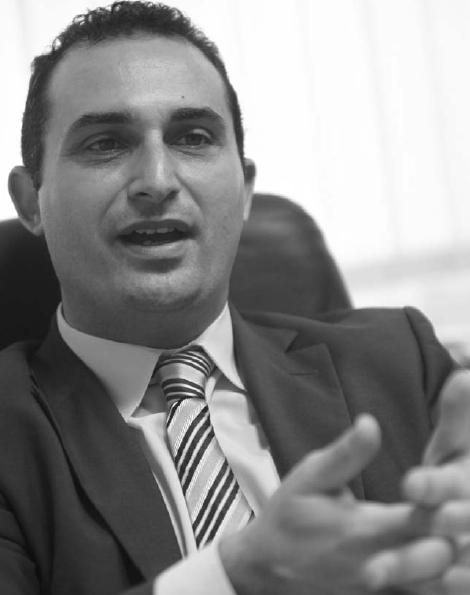
Yes, I know - yet another photo of Fran-Co De-Bo-No
It was only a matter of time before somebody did the screamingly obvious and went to the university library to dig out Franco Debono’s very famous thesis on political party financing, the one which Carm Mifsud Bonnici’s father almost failed him for.
And what do you know: it wasn’t one of the large army of reporters on a full-time salary working for our many newsrooms. No, it was a 20-year-old law student who has a pretty good blog.
He’s gone through it and found some fairly interesting quotes. But the bit over which I split my sides is the reference to the fact that this thesis is a punctuation-free zone. You know, Franco Debono writes sort of like the way Franco Debono talks: BBBBRRRRRRRRRRRRRRRRRRRR – gulps water – BBBBRRRRRRRRRRRRRRRRRRRR – twitch – jerk- twitch – BBBBBBBBBRRRRRRRRRRRR.
Anyway, you’d best read the piece yourself. I’ve put the link below.
34 Comments Comment
Leave a Comment
Read it here:
http://www.azzopardinicky.com/2012/01/practice-what-you-preach-francos-thesis.html#more
This young man (Nicky Azzopardi) is absolutely brilliant.
Aha. The wayward idiot gets ‘nicked’ by young Nicky.
And did he repeat a year during the course of his stay at university?
Didn’t he resit some of his exams? That would probably be some of his commercial law exams as he later claimed the subject didn’t really interest him.
And now commercial law is one of the specialist services offered by Debono & Associates.
The writer is biased. Expulsion from the parliamentary group does not mean the resignation of the said member of parliament from parliament. Hon. Debono is being consistent with his thesis. I have read it myself at Melitensia, Main Library and found it to be a very good thesis. Wenzu Mintoff was expelled from the Labour Parliamentary Group and remained sole MP for Alternattiva in the beginning of the 90s.
When a member of parliament is elected he represents the whole constituency not solely those who elected him. Since he isn’t a member of the Cabinet, he is not bound by the principle of Collective Cabinet Responsibility and hence is free to air his view against the Government itself. This is very healthy in a parliamentary democracy.
Under Chapter 113 of the Laws of Malta, article 11 (4) (d) – No one has the right “to compel a Member by force, insult or menace to declare himself in favour of or against any proposition or matter pending or expected to be brought before the House.” Therefore party discipline pertaining to his membership with the political party is fine but it’s going beyond the law to try to persuade the said member how he votes in Parliament. Hence you should be very careful what you say on this blog. Otherwise you’ll be breaching the privilege of Hon. Debono.
Excuse me, but which part of ‘The team must not be weakened by some of its members making clear in public that they disapprove of the government’s policy. […] If they do not like what the team is doing, they must either keep quiet or leave…’ don’t you understand?
I mean it’s black on white.
You’re very wrong Mr.Moth and i can assure you that under our Constitutional Law political parties in Parliament are not encouraged. Parliamentary Groups are not a political parties, but an association of ideologies. In fact a party whip is not even mentioned in the Constitution.
When a MP is elected to Parliament, he is not representing the interests of the NP or the Labour Party but the interests of the constituency that elected him. Therefore, when a MP does not agree with his own Parliamentary Group, he can exit that Parliamentary Group and remain MP. We elect representatives not delegates. It’s the very first lesson we get in Constitutional Law in our first year and i think it’s the most misunderstood concept in our parliamentary democracy.
You’ve completely missed the point here.
We are not debating a point of constitutional law.
Those excerpts which have been quoted by Mr. Azzopardi, are, in fact, Dr. Debono’s views and opinions on party discipline.
Dr. Debono should man up and act in line with these “core principles” as he himself penned in his thesis way back in 1999.
Whether Dr. Debono has a right to speak his own view under the Constitution of Malta is another matter which I have no interest in debating on this comments board.
From what I’ve gathered you’re reading law at the University of Malta. Then, please, appreciate this very basic distinction I am trying to draw here.
I would be pretty disappointed if Franco hasn’t learned anything since 1999.
The story shows that since then he learned (maybe from excellent working governments abroad) that democracy does NOT mean to follow blindly the “leader”.
@AB This was a doctoral thesis, not an undergraduate dissertation. Are you saying the quoted ideas are rubbish?
I believe, sir, that the bias is yours, and yours alone.
Nicky quoted directly from Debono’s thesis. There can be bias when interpreting, but there can be no bias in a quote.
And try as one might, there’s no biasing or misinterpreting this:
“Members of Parliament of the party in office should be extremely reluctant to vote against the government, or even to hold individual ministers to account, if that would embarrass it.”
“The team must not be weakened by some of its members making clear in public that they disapprove of the government’s policy.”
“If they do not like what the team is doing, they must either keep quiet or leave.”
Debono’s own words. No restriction to Cabinet members there – just plain “Members of Parliament”, the “party in office”, the “team”, and “its members”.
AB,
All your explanations about Constitutional Law are totally beside the point.
The whole point is that Debono is being anything but consistent with his thesis, contrary to what you said.
Maybe he’s being consistent with your interpretation of Constitutional Law. But consistent with his thesis? I and many others do not think so.
You have been shown how he’s NOT being consistent. Perhaps now you’d care to explain how it is that you’re seeing him as “consistent with his thesis”, restricting yourself to Debono’s actions over the past weeks and his thesis, and leaving Constitional Law aside.
Broadly speaking I inferred principles from Constitutional Law since they’re the principles that must be followed. I will quote all the quotes that were quoted on Nicky Azzopardi’s website and explain them to you.
——-
1. “Members of Parliament of the party in office should be extremely reluctant to vote against the government, or even to hold individual ministers to account, if that would embarrass it.”
Minister Gatt is bound by Individual Ministerial Responsibility. Hence, he should have taken political responsibility himself for the maladministration on the part of his Ministry.
Hon. Debono in this exceptional case did well to point it out to him that he should have shouldered the responsibility. How do the actions of Hon. Debono impinge in anyway on this statement?
Also keep in mind that Hon. Debono resigned 4 months ago from his parliamentary group hence at that vote he was not an MP of the party in office.
2. “The team must not be weakened by some of its members making clear in public that they disapprove of the government’s policy.”
Which is also true, Hon. Debono has been airing inside the structure of his parliamentary group prior to resignation his dissent for quite a long time (I’m stating what he said which has not been rebutted by anyone up till now).
Hon. Debono has resigned from the team 4 months ago, and now is free to air his view against this team in consistency with his arguments.
3. “If they do not like what the team is doing, they must either keep quiet or leave.”
In fact, he did leave the parliamentary group by resigning from the Nationalist Party. In the context of his thesis, leaving the team means leaving the parliamentary group not resigning as a member of parliament. A MP is elected in parliament in his personal capacity not for his team.
4. “The chief sanction for ‘breach of party discipline’, in the form of public disagreement with party policy or failure to support the party line in a division, is expulsion from the parliamentary party.”
In fact, he already exited the parliamentary group as I already stated. He doesn’t agree with its leader anymore and hence he’s not voting with the leader anymore.
——-
How’s that not consistent FP?
What is more important? To be consistent with something written 13 years ago to please the professor or is it more important to learn and become wise over the years?
Replying to AB’s post “Broadly speaking …”
Congratulations. You can give yourself a pat on the back. You’ve just won a courtroom argument. You’ve given yourself the classic lawyer’s slip by clinging on to an exit clause for our dear Franco: he is not a member of the party any longer, so anything he wrote about members of the party in office then does not apply to him now.
Whether he did actually resign, whether his resignation was accepted, whether he retracted his resignation … all this is not relevant. For all intents and purposes, he stopped being a member of the PN party. That is your argument. And that’s fine.
Bravo. Well done. Well done to Franco, too.
Just bear in mind that Franco (I can’t get myself to call him Hon. Franco – to my mind, he has lost all honour that the Repbulic had bestowed on him in 2008) was elected by voters supporting the PN Party. He was elected as part of the PN team.
It is the trust of these voters that bind him to the PN Party and the PN team, and not some legal jargon that lawyers play with to shirk their responsibilities to their voters and their voters’ party. Franco’s votes are the party’s votes. The moment he stopped being a member of the PN Party, he automatically devested himself of the power of those PN votes.
Technically and legally, he still holds that power. But by using it against the same party that gave him that power to bring down the party from government, Franco is breaking the trust of the voters that elected him as a member of the PN Party.
You and Franco, being of the same mind, may both walk out of the courtroom all proud and smiling. You may even impress the judge with your brilliant rhetoric. Just don’t expect any parties waiting for you outside the court house.
If he represents the whole constituency, doesn’t it mean that he’s bound to include those who elected him?
It becomes a contradiction in terms when his declared intention is to bring down an elected government.
Maybe what’s missing is the absence of a responsible opposition, ready to put into jeopardy the stability of a majority and which never came forward in support of his ideas and proposals.
If Franco, as you say, intends to uphold his constituency and his ideology, why didn’t he do what JPO did with his divorce motion and have it seconded by a member sitting across the house?
The vote in parliament would have decided matters, which, and I’m not being sarcastic, I believe corresponds to democracy at work.
The fact he didn’t and is declaring he’ll vote with the opposition on it’s no confidence motion, directed at a government, is rather different to what he stated previously.
The initial impression given by Franco is that of a person who’s easily upset if others aren’t as enthused with his ideas.
What’s interesting, however, is how yesterday, Chris Cardona was painfully maneouvering his leader away from the opposition’s motion, mentioning so called legal instruments to avoid elections.
It seems both Franco and Joseph have no intention of being associated with the consequences of the motion itself. Franco lumping it onto Joseph, the latter throwing it back to the PM.
What is clear is Joseph’s attempt to pass the buck onto Lawrence Gonzi, whilst at the same time hinting at the need for elections.
Is this to confirm the other spiel; ‘In-Nazzjonalisti xebghu fil-gvern’?
The ‘instability’ is the result of repeated iterations of previous outbursts stoked by a passive opposition, and the utter lack of commitment to a final position. Privilege is, if I may, a duty to decision.
Lawrence Gonzi is to carry on as long as he has the majority in parliament. It’s ludicrous to expect him to bring down his government.
@AB, Franco’s resignation was not accepted, therefore he is still forms part of the PN (you might have missed the fact that he was in Parliament on the government’s backbench yesterday), so not one of your explanations makes sense.
I have been thinking a bit more about how Maltese newspapers and television channels discuss Franco Debono as if he is perfectly rational and it struck me that in Malta, Kim Jong-un being constantly described as ‘chubby’ would be considered a personal attack.
Conversely, every newspaper and news channel worth its salt realises that there’s something very wrong about being fat while reigning over a starving population.
This year Venezuela will be holding elections. Reputable news sources are discussing Hugo Chavez’s ability to lead the country through another cycle considering that he is recovering from an undisclosed form of cancer.
Proper news sources are also wondering about Cristina Fernandez de Kirchner’s ability to lead Argentina considering she has also recently undergone treatment for cancer.
When John McCain was running for president, everyone was wondering out loud whether he would pop his clogs before his term is out leaving the United States in Sarah Palin’s hands even though he seemed to be a very healthy and strong individual.
When Ted Haggard was accused of hiring male escorts, all sane journalists reported the fact, not because they cared about his sexual exploits, but because he had been such a vocal anti-gay campaigner.
The same goes for Silvio Berlusconi’s dalliances with young girls. Men having relationships with young girls is not unheard of but when you’re disloyal to your wife, you’re so powerful and you’re reigning over a stagnating country, being more concerned with young girls and the state of your hair matters.
In Malta, discussing these issues is considered a personal attack. Someone who raises these issues is immediately labelled sexist, ageist, nosy or whatever name people decide to call you.
Alfred Sant’s shrouded illness (which later turned out to be colon cancer), Alfred Sant’s and Josph Muscat’s obsession with their hair, Cyrus Engerer’s vendetta on his boyfriend, Jeffrey Pullicino Orlando’s separated status, Consuelo Scerri Herrera’s parties… business interests, health, sexual orientation, social life, religious beliefs, wealth, mental state and so on. Pretty much anything is considered personal.
What Maltese journalists (for want of a better term) don’t seem to realise is that, although anything can be considered personal, once an issue affects other people’s lives or runs contrary to your public persona, if you are a public person, that issue stops being personal no matter how intimate or embarrassing it is.
At the moment, we have a bizarre situation where we have a huge white elephant wandering around the room and almost everyone seems to be ignoring it.
If people still had doubts about Franco Debono’s mental imbalance, his eye popping performance on Bondi + should have laid those doubts to rest. The fact that the media is still discussing Franco Debono as if he is perfectly normal and rational a week later shows that we are a country firmly in denial.
In my opinion, our fear to tread any toes “to avoid personal attacks” is more a threat to democracy than any of the issues raised by Franco Debono.
If Malta were a vigorous, healthy democracy, psychologists would be working over time analysing Franco Debono for news outlets, everything would be being discussed in the context of who Franco Debono is and the matter would possibly also be discussed in parliament or brought before the president.
Franco, it’s not personal, it’s business.
Anything less is a gross injustice on the whole population and it means we are are happy letting a narcissistic, vicious person with a huge ego ride roughshod over everyone as long as we are not seen to offend.
Well done, Nicky!
That should send this hypocrite signed, sealed, and delivered right where he belongs.
Let’s see who’s going to be the first “journalist” to pick this up and face our dear highflyer with his monumental academic achievement.
Neither Maltatoday nor Maltastar.
It won’t be Saviour Balzan, that’s for sure. He’s now in thrall to the man he formerly described as unbearable (I agree with that bit).
His task is made even harder when his own words contradict his actions. The following are excerpts from Franco Debono’s own thesis (a thesis which was only accepted after considerable leniency and compassion) outlining his ideas on party structuring, financing and discipline.
“Members of Parliament of the party in office should be extremely reluctant to vote against the government, or even to hold individual ministers to account, if that would embarrass it.”
“The team must not be weakened by some of its members making clear in public that they disapprove of the government’s policy.”
“If they do not like what the team is doing, they must either keep quiet or leave.”
According to the modern trend against sex discrimination the ancient proverb should be be changed to “it is a parliamentarian’s privilege to change his/her opinion according to the exigencies of the moment – not just a “woman’s” privilege.
You usually do not write opinions in theses – ‘The team must not be weakened…etc.’, but analyse different scenarios and back them up with references, examples from other sources etc.
And anyway why worry. Who cares if this government or any other crumbles… it is not the end of the world… unless you have a huge juicy contract waiting.
WHY didn’t this come to light in say, The Times, instead of on a blog written by this very bright young guy?
Insurance?
La Redoute, above, describes Franco’s scribblings as ‘a doctoral thesis, and not an undergraduate dissertaton.’
In fact it is a dissertation written by an undergraduate.
When Maltese lawyers go abroad to specialise and do postgraduate studies, what do they get? An LLM. A Master’s degree – a level beneath that of a doctorate, note.
Why do lawyers refer to themselves as ‘dr’, then?
Because they’re wankers who love to hold on to Italianate tradition to make themselves look important.
John is right. Our lawyers DO NOT write a doctoral thesis. A doctoral thesis is a compendium of peer-reviewed publications resulting from doctoral research. What is known in Maltese as “Il-Pi Ejc Di”.
The only people who should be calling themselves Dr are PhD holders and medical doctors.
Because this is Malta where everyone is pumped up with self-importance.
We take after Schettinoland in this matter.
Look at the dentists, who also call themselves ‘dr’. Their degree is ‘bachelor’ of something or other.
I know perfectly well that what Franco wrote is known as a doctoral thesis in Malta, even though it is a dissertation written by an undergraduate. And that’s a fact.
@HP Baxxter and john
Don’t lawyers graduate as BA first? And isn’t their degree denoted as LL.D? That would make their doctorate a second degree, and the thesis, therefore, not an undergraduate one.
Regarding the LL.M, it could be that the Master’s course they followed is a taught one. Besides, there’s nothing to stop someone with a BA and a doctorate in an area to work for a master’s in a different “branch” of the same discipline, is there?
Dentists get a B.Ch.D – which is probably Latin for “baccalaureate in dental surgery”, but they share their first few semesters with the MDs, so they’re entitled to bask in their glory *Ahem*.
PLUS they still have to get good A level grades to get in. Granted, it’s not nearly as impressive as getting a good Form 2 mid-yearly report, but still… not everyone is a high achiever.
I trust that ‘Muscat Joseph 1966’ is listed in Franco’s bibliography.
That should be 1996, the date of Joseph’s dissertation on a similar topic.