
Funding for City Gate Project
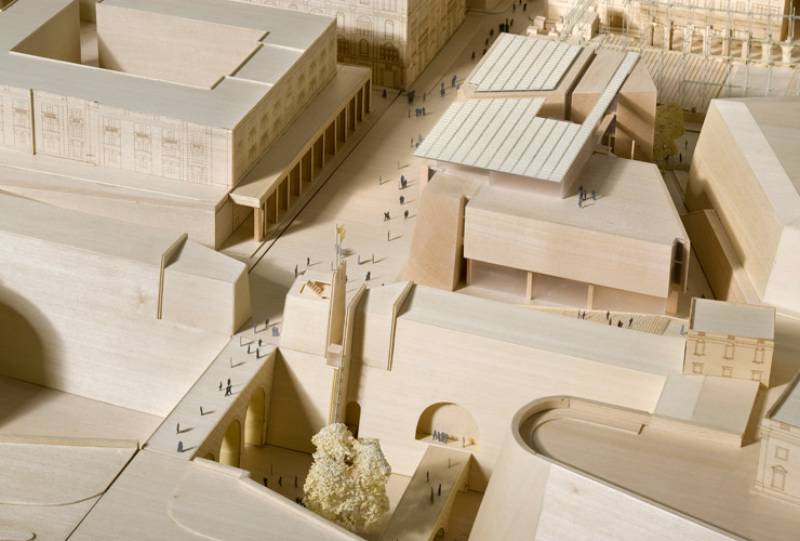
On timesofmalta.com this morning:
Finance Minister Tonio Fenech said today that the public will be able to participate in the City Gate project through a special purpose vehicle which will be listed on the Malta Stock Exchange.
Speaking on the PBS interview programme Ghandi xi nghid, the minister said the government would, in effect, be renting the space of the project and paying the SPV which is to be set up by the Valletta Regeneration Corporation.
This was a concept which, if successful, could also be applied for the funding of other capital projects, the minister said.
The €80m project includes the demolition of city gate, the rebuilding of city gate bridge, the building of a new parliament building and the conversion of the old theatre ruins into an open air theatre.
Funding is currently being provided through a Bank of Valletta loan.
27 Comments Comment
Reply to ciccio2011 Click here to cancel reply
Hmmm. So this bursts another bubble of the Labour Party when they say that the government is wasting Euro 80 million instead of reducing the water and electricity rates.
Now wait for the usual negative reaction of Labour.
In principle, this is a great idea. It takes the “city built by gentlemen for gentlemen” (Disraeli, 1830) to “city built by gentlemen for gentlemen owned by the gentlemen” (ciccio, 2011).
Who would not want to own bonds in a project located at City Gate, designed by Renzo Piano, and where the major tenant is the government?
And there is another hidden advantage also. The people will now own the Parliament, so if those 69 representatives in there do not behave properly, the people can issue an eviction order…
One minor problem, ‘The people’ will want to have a say in the design of the building……again.
There aren’t many gentlemen left in Malta, ciccio2011.
“Now wait for the usual negative reaction of Labour.”
Daphne, do your sleight of hand – put a pro-Gonzi spin on this.
Then, with hand on heart, say you believe it is the good for Malta. Come on, darling… ;)
[Daphne – I’m sorry, but I don’t get your drift. Perhaps that’s because we’re not on the same wavelength. I have been all out in favour of this project for the last 21 years, since I interviewed the people involved and wrote a piece about the original Renzo Piano Valletta project in 1990.]
Eurozone Crisis : We are all in the same boat.
http://www.bbc.co.uk/news/business-15748696
Who owes what to whom in the eurozone and beyond?
No one country is immune.
Pecksniff, my 60:40 probabilty. Euro collapses. Greece goes back to the Drachma and immediately devalues. Spain reintroduces the Pesata and devalues. We go back to the Lira, which stays stong, since our relatively strong debt to GDP ratio will be tied to a strong Deutschemark.
Our tourism tanks. Exports plummet..
Hey Joey, can your ‘economic experts’ Vella and Mangion help you concoct a plan to combat this scenario? Maybe the elephant man could ‘weigh in’. Keep it secret, though.
Call me an optimist, but I don’t think the Euro will be allowed to collapse. It’s in no-one’s interests.
The PIIGS will go bankrupt within hours.
On the other hand, a new strong D-mark will hit hard German exports, on which Germany depends for it economic growth.
So my take is that this cyclical drama of market panic, followed by an EC summit, more market panic and the ECB coming to the rescue will be prolonged as much as possible. Until the banks are ready to take the necessary haircuts and Germany boosts domestic demand, that is.
But then, I’m not an economist.
who the hell will invest his money is such a farce?!?!
“And there is another hidden advantage also. The people will now own the Parliament, so if those 69 representatives in there do not behave properly, the people can issue an eviction order…”
ciccio2011, are you possibly that dumb?
It’s spelt I.R.O.N.Y.
‘ciccio2011, are you possibly that dumb?’ The obvious answer there would be yes as whatever it is follows Daphne.
[Daphne – James Tyrrell, Defender of the Faith in Astrid. You can always be relied upon to pop in when her name is taken in vain.]
Still on the James Tyrell thing I see. He must have really annoyed you at some point! Funny I didn’t see her name mentioned here! If you are referring to the other piece you wrote obviously I didn’t comment because it is just the same crap you write all the time with a few little unimportant supporters to back you up plus the bits you add in yourself under different names. I force myself not to comment because I suppose I feel sorry for you. It can’t be easy playing the part of a sad bastard all the time.
[Daphne – Yes, James, I sympathise. It really can’t be easy being a sad bastard all the time. Sad bastards are male.]
What’s the whole point of reproducing this report from The Times? I don’t get it.
If anything, I’d expected you to comment on why one should in interested in financing projects that do not generate any revenues, like city gate and parliament.
Raphael Vassallo hit it right on the head –
“Translation: Government has finally realised it can’t raise the funds (EUR80m) through its earlier plan to rent out government properties; nor can it fund the project itself without derailing its own financial projections to reduce deficit (incurring risk of Commission infringement procedures, etc). So it turns to the people to pay for the project, despite having assured us all that it would ‘not be a burden on the taxpayer’. Moral of the story: if you can’t afford something, don’t frigging buy it.”
It is not a burden on the taxpayer.
There is such a thing as cultural tourism, and that includes visiting a place for its architecture.
The project in question has to be one of the trickiest when it comes to semiotics.
You can rest assured it will provide a new kind of tourist from Italy and France who will want to see Piano’s latest and if I may, most understated iteration yet. They will be the ones who’ll attend events in the theatre, and the entrance fee for the national art collection at the Auberge d’Italie.
Not mentioning local industry’s enriched portfolio. It’s a virtuous cycle.
By capitalising an asset into an investment, the taxpayer will be paying only for the use, but not for the investment. The investment will be paid for by the bond holders, who are persons willing to take a risk, for which they will get interest income.
I would like to remind people that SPV’s have a very bad rap after Greece.
What’s a measly €80 million next to the €750,000 million we’ll be paying on our national debt?
“Debt servicing costs are next year expected to reach a staggering €751.8 million, a jump from €404 million this year.”
http://www.timesofmalta.com/articles/view/20111115/local/financial-estimates-raise-a-few-questions.394011
‘Staggering’ indeed – I never thought it stood so high!
But I guess that’s the norm, these days. And to think otherwise would render you a ‘conspiracy nut’. Let’s just see where the spiral leads to. Heaven, perhaps?
I hope you do realise that the €750m figure includes roll over in existing debt stock, with actual ‘yearly’ interest payments being much, much lower.
Correction: 750 million
I also love how they knocked down the previous City Gate in a hurry (as hideous as it was, at least it wasn’t a construction site) without even knowing how to finance its replacement. Tiċċaqlaq il-funtana għal €4m oħra wkoll kien jonqos. Jaqaw tilfu xi flus imwiegħda minn Kristu tal-Muntanja jew?
Kien hawn wiehed jghid li jekk jonqos ix-xoghol lest ihott is-swar tal-Belt.
Kien hawn wiehed jghid li jekk jonqos ix-xoghol lest jissospendi id-demokrazija.
To tell quite frankly, I did not know what SPV (special purpose vehicle) means.
For the sake of your readers who have the same problem (I hope not) can link to these websites for its full definition.
http://www.investopedia.com/terms/s/spv.asp#axzz1eDurFYqX
http://en.wikipedia.org/wiki/Special_purpose_vehicle
I can’t see the benefit of buying such bonds unless it carries a rate of interest superior to any other Government Stocks & bonds. At the end (theoretically) what is owned by the Government is owned by the people anyway.
It’s a workaround. The government is determined to lower its deficit.
It cannot do that if it spends 80 million euro from public funds.
So it uses a special purpose vehicle, which is nothing but a slightly wonky name for a form of government bond. GIven the way government bonds have been snapped up, it shouldn’t be too difficult to fund the SPV.
The benefit, then (and it’s a very good question) is that by subscribing to the SPV, the people will ensure that Malta stays within the EU’s strict rules on deficit and public debt.
Which means that Malta will be more likely to keep its positive credit rating. Which means that the government will be offered better interest rates. Which means that it will be easier to pay off our debt and balance our budget some time before 2020, which is the final objective of all sensible governments in Europe and the Western World.
I’m not an economist , just a dilettante who knows that there were experienced Maltese economists including ex-government consultants who invested in the La Vallette Property Fund , and ex-drydocks workers who invested their retirement scheme money in high return unsecured bonds, and hundreds of people who over-subscribed the last government bond issue.
So if there is a fixed guaranteed reasonable return on the Piano Project SPV, the financial tool will be bought in no time by Maltese investors.